





News · Schools · SEK Global Campus
Luis Joaquín, IB Online teacher at SEK: supporting students beyond the screen

Luis Joaquín has been part of the SEK Education Group for over eight years. A Geography and History teacher, he teaches both at secondary and sixth form level—covering the Spanish national curriculum and the IB Diploma Programme—in English and Spanish, and is also involved with the Global Campus, where he teaches History as part of the online International Baccalaureate Diploma Programme.
His journey within the institution began almost by chance, but over time it has developed into a well-established professional and personal experience. “I arrived by chance, and that chance has turned into eight years here,” he explains. From the very start, several aspects caught his attention: the focus on languages, the emphasis on debate and public speaking, and the wealth of international experiences offered to both students and staff.
“These are the three key factors that keep me motivated within the school,” he notes. Over the years, he has been able to get involved in educational initiatives that go beyond the classroom, taking part in training activities and international projects that also enrich his teaching work.
A global education that goes beyond the classroom
One of the most striking features of SEK’s educational model is its international dimension. This is not only due to language learning from an early age, but also to the diversity of experiences made available to pupils.
Drawing on his experience at SEK Alborán, where he also teaches, he emphasises the importance of this dynamic environment in which students have access to a wide range of opportunities. “It is important for pupils to see that there is this sense of movement within the school, that there are options and that they can take advantage of them if they wish,” he explains.
This approach is, in his view, key to the pupil’s holistic development, as they acquire not only academic knowledge but also skills such as communication, critical thinking and the ability to adapt.
The value of the International Baccalaureate in a global context
As a teacher who delivers lessons across various educational programmes, Luis Joaquín is well aware of the differences between the national Baccalaureate and the IB Diploma. In his view, the two models are complementary, but the International Baccalaureate offers an approach that is particularly well-suited to students with specific needs.
In the case of SEK’s IB Online programme, this profile typically applies to students who, due to personal, sporting or geographical circumstances, are unable to attend face-to-face classes. “These are students who need flexibility, and that is where the online programme makes a difference,” he explains.
The challenge in this context is to replicate the sense of connection found in a face-to-face classroom within the digital environment. To achieve this, teachers provide constant support. “We try to ensure that connection is genuine, even with a screen in between. Students know they can message us at any time and that they will receive a reply,” he notes.
The use of tools such as Teams facilitates this ongoing communication, combining live lessons with personalised support. When a more complex query arises, video calls become a key resource for maintaining that close contact.
Support and monitoring: the core of the online model
One of the key distinguishing features of SEK’s International Baccalaureate Online programme is the personalised support provided to students. Beyond the lessons themselves, there is constant coordination among the teaching staff to ensure that every student is making good progress.
“We hold weekly meetings between teachers and tutors where we discuss how the students are getting on, not just academically, but also personally,” he explains.
This support is particularly important in an environment where student autonomy plays a key role. The online model demands organisation, consistency and responsibility, but at the same time offers tools to facilitate this process.
Lessons are recorded and made available in a repository, allowing students to review them at any time. In addition, they have access to platforms where they submit assignments and receive continuous feedback, enabling teachers to closely monitor their progress.
“Although there is a structure and a timetable, students also have to work independently. We guide them and provide highly personalised support so that they can achieve their goals,” he says.
Flexibility to adapt to every situation
For Luis Joaquín, one of the great strengths of SEK’s IB Online programme is its ability to adapt to a wide range of situations. From students who excel in sport to those facing complex personal circumstances or coming from other countries.
“Flexibility is key. It allows young people from very different backgrounds to continue their academic education without having to give up on their current lives,” he explains.
This adaptability, combined with constant support, creates an environment in which students feel supported, even when studying remotely.
An international classroom, now available online
Cultural diversity is another hallmark of the programme. In his classes, Luis Joaquín works with students of different nationalities, which enriches the learning experience and brings a wealth of perspectives.
“In a single class, you might have students from the United States, Portugal, the United Kingdom or Spain,” he says. This diversity is also reflected in the work they do, particularly in subjects such as History, where they can research topics related to their own countries.
Furthermore, the programme fosters spaces for interaction where students share experiences and build connections, helping to reinforce a sense of community even in an online environment.
A view he also shares as a parent
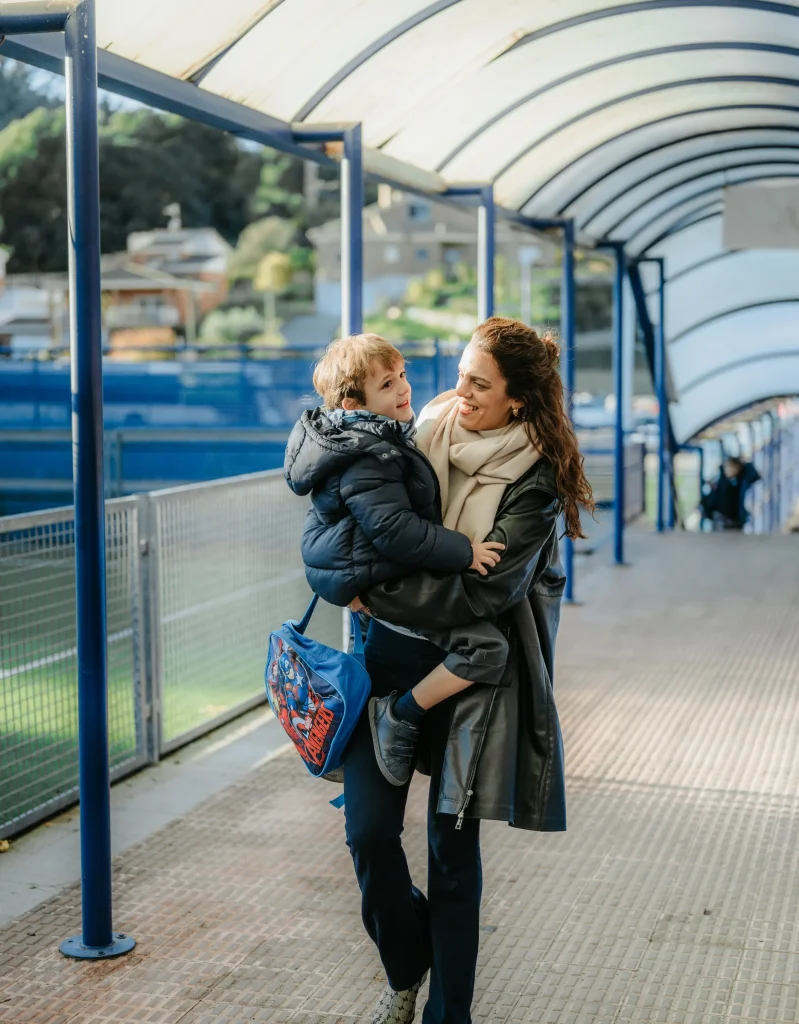
Beyond his role as a teacher, Luis Joaquín also experiences SEK’s educational project from a personal perspective. His two children attend SEK Alborán, a decision he made precisely because of the values and opportunities the school offers.
“Languages are key, but so is ensuring they have access to a range of activities and can develop skills such as communication and critical thinking,” he explains.
For him, the important thing is that children grow up in a dynamic environment, where they can discover their interests and develop them freely. “They have many opportunities, and the important thing is that they know these opportunities are there for them to take advantage of if they wish.”
“Support, adaptability and humanity”
For families considering the International Baccalaureate Diploma Programme online, Luis Joaquín is clear: it is a particularly suitable option for those who need flexibility without compromising on the quality of their education.
“If a student needs personalised attention and the ability to adapt to a specific situation, the Global Campus is a very good option,” he says.
When summarising the SEK experience in three words, he highlights three concepts which, in his view, define the model well: support, adaptability and humanity. Three core principles that reflect an approach to education where the student is at the centre, even when the classroom is on the other side of a screen.
Shall we talk? We will be delighted to help you


